
“Fiercely contested, wildly disputed, you lie at the heart of the Continent…”
(Austrian National Anthem, 2nd verse)
—
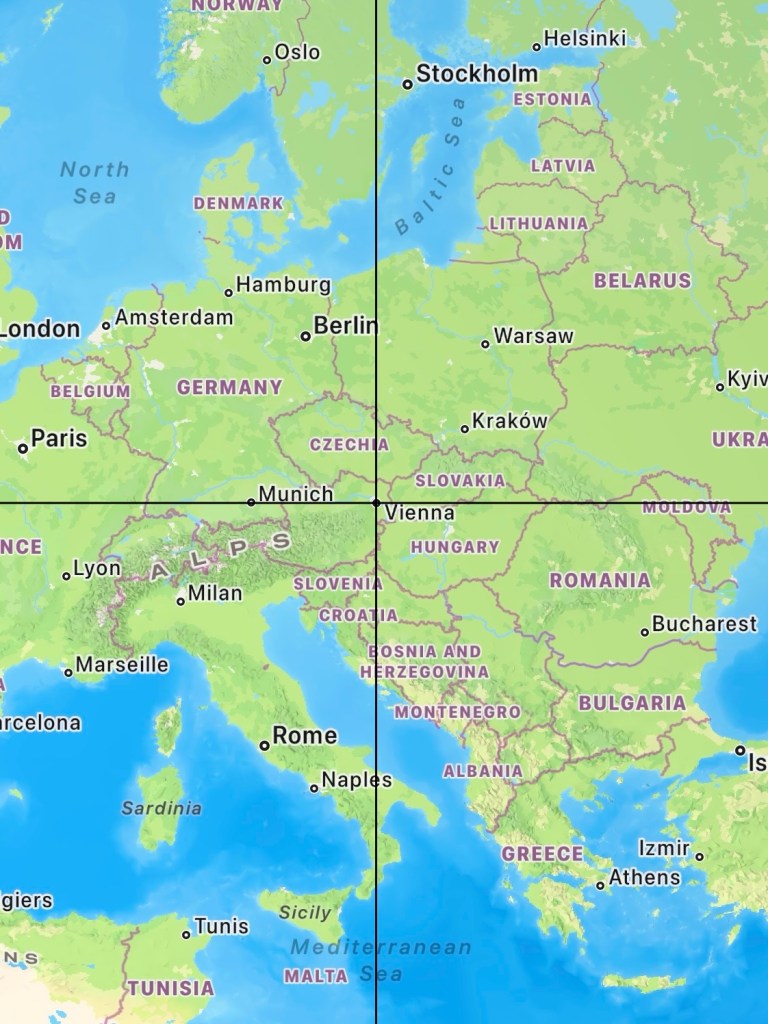
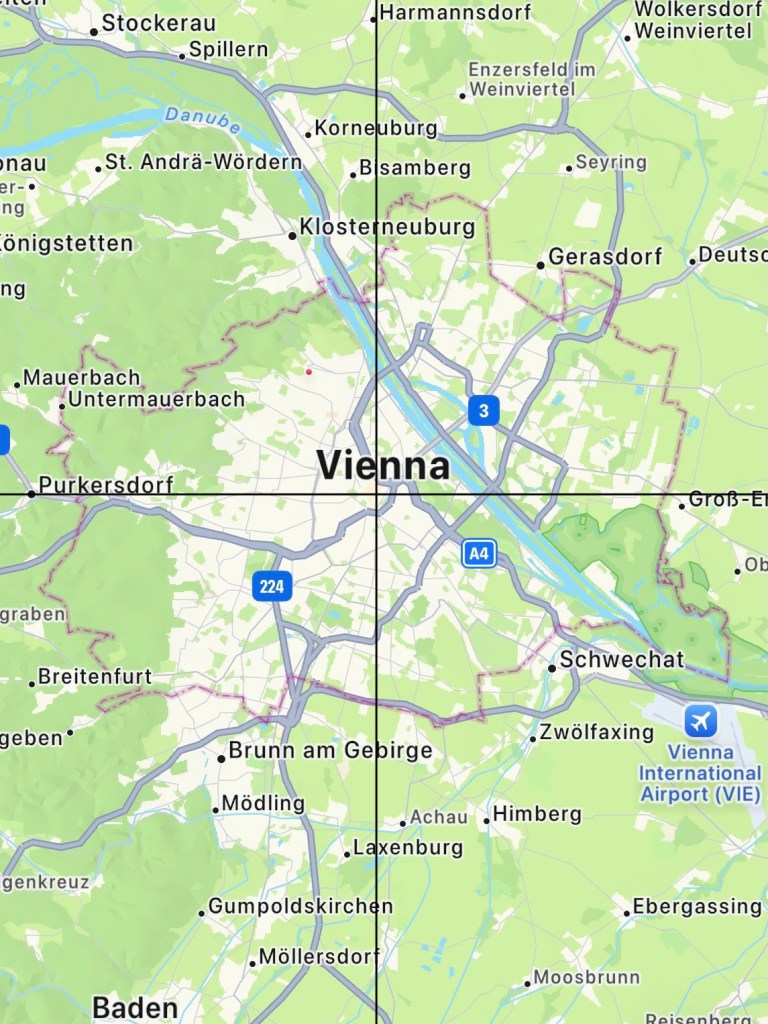
The Austrian Imperial Chancellor Klemens von Metternich once remarked: “The Balkans begin at Rennweg.” For those unfamiliar with Vienna, it should be added that Rennweg is a well-known Viennese street in the southeast of the city center. One of Vienna’s embassy districts and Prince Eugen’s Belvedere Palace are located there. Metternich himself had his palace straight on this road leading southeast, towards the Balkans. Today, his former residence houses the Italian Embassy.
Slavoj Žižek, the Slovenian philosopher, gives a short lecture on the Balkans. This “powder keg of Europe,” with its diverse population in southeastern Europe, is considered to be the epitome of chaos by those in the northwest of our small continent. In short, Žižek’s point is that every country in Europe sees its own southeast as the “Balkans.” From Serbia and Croatia, through Slovenia, Austria, Germany, all the way to France and the Benelux countries – and then up to Great Britain, for whom the entire “continent” resembles a single Balkan mess.
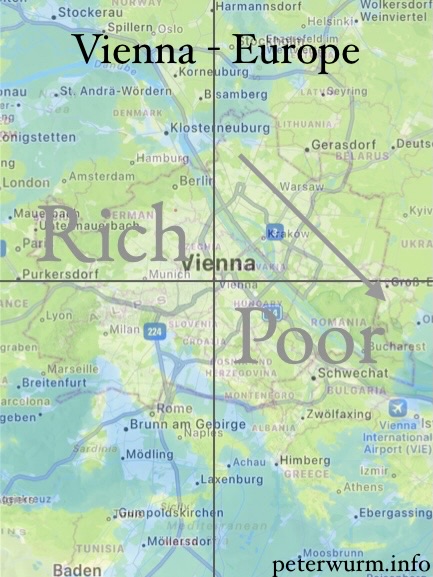
Anyone who lives in Vienna knows that our hometown in the heart of Europe is structured just like the rest of the continent. While the wealthy areas—on the edge of the Vienna Woods—are located in the northwest, the poorer districts can be found in the southeast—including the waste disposal facilities, the enormous Central Cemetery, and the tiny “Cemetery of the Nameless.” The Central Cemetery, immortalized in song by the Austrian pop singer Wolfgang Ambros, is said to be only half the size of Zurich, but twice as fun. “Death, that must be a Viennese,” goes the saying about this morbid charm of our city.
In short: Vienna is fundamentally structured just like Europe. Even the beautiful Blue Danube, which our “Waltz King” Johann Strauss famously set to music, flows through Vienna to the Southeast—and from there until its mouth into the Black Sea. Out of this geographical position, most Viennese see no need to ever look beyond the confines of their hometown. This unpleasant disadvantage of the city is compensated for by a great advantage for the whole world: Anyone who wants to experience the character of Europe, with all its beauty and horrors, should simply come to Vienna!
For many years, Vienna has been voted the most livable city in the world in global surveys. At the same time, however, according to these same surveys, Vienna is also the most unfriendly major city on earth. The great advantage of visiting Vienna is that you can always leave if you’ve had enough of the unfriendliness of its inhabitants. The “Golden Viennese Heart” may shimmer with a golden hue, but is truly made of hard metal.
On the other hand, anyone who doesn’t want to miss out on the high quality of life in this heart of Europe, especially the excellent quality of water and bread, will eventually end up in one of its countless cemeteries. Whether one is buried in an honorary grave in the central cemetery or in a pauper’s grave in the cemetery of the nameless is ultimately decided by fate. Like everything else in Vienna…
—

