
Why Basel Airport is preventing the end of time change in Europe
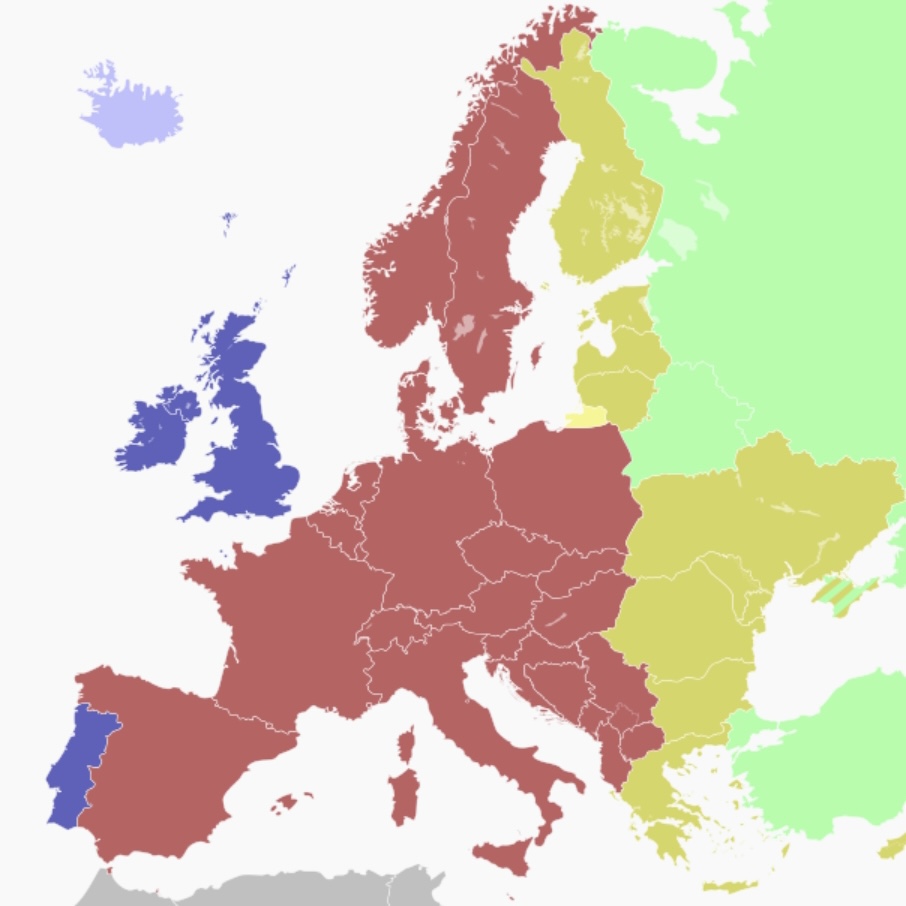
At 3:00 a.m. on the night from Saturday to Sunday this weekend, the clocks will be put back one hour again in whole Europe. This ritual of changing the time is performed twice a year, once in spring towards summer time and once in autumn back towards winter time. Although this unnatural procedure is getting on the nerves of humans and animals, it has not yet been abolished. Why?
Central European Time (CET) applies from the Ukrainian border to the Atlantic coast. This is a span of around 2,500 kilometers. This enormous distance means that the sun will rise at 06:18 this Sunday in Lublin, Poland, and at 08:05 in Vigo, Spain. This difference is therefore – within the same time zone – more than one and three quarters of an hour. The day before, due to daylight saving time, sunrise occurred at 07:17 in Lublin and at 09:04 in Vigo.
This example shows the difficulty of this problem: Somewhere in Europe it is either dark far too early in the evening or light far too late in the morning. This distance of around 2,500 kilometers leads to a huge problem within a single time zone either in winter or in summer.
What would be the solution? The most plausible solution would be for the Benelux countries, France and Spain to adopt the Western European Time of Great Britain, Ireland and Portugal. From a geographic point of view, that would be the truth based on the position of the sun. From a geographic point of view, “noon” occurs when the sun is at its zenith.
However, this solution leads to a massive economic problem: Western Europe is the largest economic area in the world. The international network between Germany, Switzerland and Italy with their western neighbors is denser than anywhere else on esrth. If, for example, a different time zone applies on the left bank of the Rhine than on the right bank, this will lead to the greatest economic problems.
This problem is most evident at Basel-Mulhouse-Freiburg Airport, the EuroAirport. This airport at the border triangle of Germany-Switzerland-France has two exits. One exit leads to Switzerland in the direction of Basel, the other to the European Union in the direction of Mulhouse. If a different time applies in Mulhouse in France than in Basel in Switzerland, then there are two different departure and landing times for each flight at this airport. Every take off, as well as every landing, would happen at two different times each time.
The same applies to the European research center CERN in Geneva with its particle accelerator. While such a fact is principally possible in quantum physics, it’s not in everyday human life so far. Therefore, I am afraid that the time change in Europe will remain so for a long time to come.
—
 Vienna Calling